Steve Khan's Solo on:
"Dreamsville"(Mancini-Livingston-Evans)
When "Dreamsville" was released on December 19th, 2025, I had no idea as to what to expect from a ballad performance dating back to 2005 and "THE GREEN FIELD" recording w/ John Patitucci (Ac. Bass), Jack DeJohnette (Drums) and Manolo Badrena (Perc.). However, the response from people, friends, colleagues and fans alike has been so warm and encouraging that I was quite surprised. Over the course of these past several weeks, I have received many requests wondering if I had done a transcription of my solo on "Dreamsville." At that point, I had not done any such thing. But as more messages and e-mails came in, I felt that I had to attempt to do it. So now, I am here to share those labors with everyone via my website. Though much of the story of how this performance came to be was posted as part of the original Lead Sheet & Analysis post on December 19th, I am sharing again as part of this post so that you, the reader, do not have to go jumping around from page to page. The analysis of the solo itself begins just a few paragraphs down.
On May 23rd, 2005, when I recorded "THE GREEN FIELD" with John Patitucci (Ac. Bass); Jack DeJohnette (Drums) and Manolo Badrena (Perc.), "Dreamsville" (Henry Mancini)(6:57) was probably the last song that we recorded late in the night of that date. Because "THE GREEN FIELD" already would contain some 77-minutes of total music time, sadly there was no room for "Dreamsville" to be included.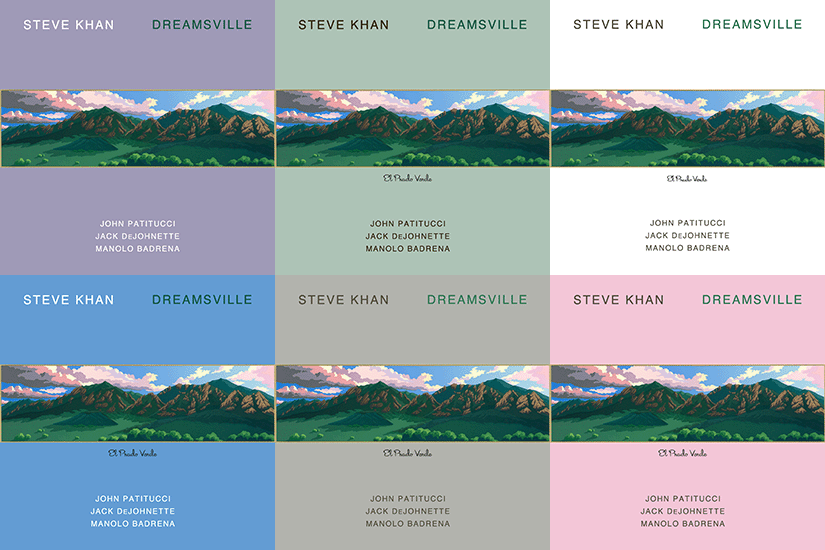 It bears mentioning that we also recorded McCoy Tyner's "Blues for Ball"(7:07) that day, and there was no space for it as well. All of this took place at Avatar Studios, Studio 'A' with engineer Malcolm Pollack sitting at the console. It bears mentioning that we also recorded McCoy Tyner's "Blues for Ball"(7:07) that day, and there was no space for it as well. All of this took place at Avatar Studios, Studio 'A' with engineer Malcolm Pollack sitting at the console.
Two years later, in 2007, when I recorded "BORROWED TIME," because of the same personnel, I hoped that "Dreamsville" could be included there. But because of the diverse direction of that album as a whole, there would be 75-minutes of music - and once again, no space on the CD for "Dreamsville." However, there was space for "Blues for Ball" and I was very grateful for that. Even so, during the mastering session @ Sterling Sound with engineer Greg Calbi, we mastered "Dreamsville" just in case. And so, for roughly 20 years, this beautiful ballad has sat around in my archives without an official place to be, a format in which to be heard.
Because of the recent passing of the great Jack DeJohnette, I thought of this performance and Jack's superb brushwork throughout. I wanted people to be able to hear it and so, an idea came to me, hoping that it might be possible. I reached out to and offered the track in a direction, familiar to me, just as is and I would feel good about it, really good about it. In truth, this was, for me, really the best possible option, if Joseph Patrick Moore and his Blue Canoe Records would be willing to take it on. Joseph and Blue Canoe were wonderful to work with in 2022, when they chose to release the "Island Letter"(Shuggie Otis) project, which I did alongside the remarkable Mark Kibble (Take 6). With the help of Blue Canoe, that turned out to be a very nice artistic venture for us all.
As things turned out, Joseph listened to the mp3 of "Dreamsville" that I had sent him along with my proposal and, most fortunately for me, he called back rather quickly and said that he very much wanted to do it. I was so thrilled, and very relieved. I had no idea that Joseph was going to propose, of all things, a December 19th release date. In the music business, standard thinking about the release of new LPs or CDs was always that, you never release anything from November until about January 15th, unless of course, you are a Superstar!!! However, in the new world of music & business, in the Digital Age/Era, where everything has been turned upside down and inside out, I suppose one has to let go of that kind of thinking. And so, here we are, and "Dreamsville" was, in fact, released on December 19th right on schedule. Needless to say, I am exceptionally grateful to Joseph for his adventurous spirit and high level of integrity. It also has to be said that originally I was guided and intoduced to Joseph and Blue Canoe by my dear friend for many, many years, bassist/producer Jimmy Haslip.
It is often forgotten or overlooked but Henry Mancini's "Dreamsville" was composed for Season 2 of the TV detective series "PETER GUNN" which starred Craig Stevens,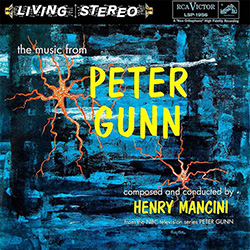 and it would appear on the 1959 soundtrack album "THE MUSIC FROM PETER GUNN." Prior to my own interpretation and recording, my favorite versions were by my hero Wes Montgomery with my absolute favorite vocal version being by Sarah Vaughan and caressed by Bill Holman's gorgeous arrangement. And who better to interpret this beautiful ballad than Henry Mancini's daughter, Monica Mancini, here in a duet with Kenny Rankin.More recently, I have loved interpretations by: Ben Monder, as usual, the most imaginative of all the versions! Peter Erskine with some spectacularly romantic harmonies courtesy of John Beasley. Lastly, the always wonderful David Grusin with a vocal by Diana Krall As a listener, you can't go wrong with any of these versions. and it would appear on the 1959 soundtrack album "THE MUSIC FROM PETER GUNN." Prior to my own interpretation and recording, my favorite versions were by my hero Wes Montgomery with my absolute favorite vocal version being by Sarah Vaughan and caressed by Bill Holman's gorgeous arrangement. And who better to interpret this beautiful ballad than Henry Mancini's daughter, Monica Mancini, here in a duet with Kenny Rankin.More recently, I have loved interpretations by: Ben Monder, as usual, the most imaginative of all the versions! Peter Erskine with some spectacularly romantic harmonies courtesy of John Beasley. Lastly, the always wonderful David Grusin with a vocal by Diana Krall As a listener, you can't go wrong with any of these versions.
At the original session, because any slow ballad could easily take 10-plus minutes to perform, I had to come-up with a format that would give us time to express what was needed, but would somehow be compact too. Where the solos were concerned, I decided to have John Patitucci play his solo over [A] and [A2] and then, I would enter at [B] and then follow that by playing [A3] and then, [A][A2]. The melody would return at Letter [B] through [A3] with a Coda for the [Tag]. At the original session, The only Strat 'orchestrations' that I performed were in the [Tag] to the ending, and the last chord. But after the passage of so many years, and the possibility of getting this performance heard, I felt the need to 'complete' what I had started on that night some 20 years earlier. And so, on the afternoon of Thursday, October 30th, 2025, I sat down quietly with my Strat and orchestrated "Dreamsville" with my own ghostlike colors. Then I took another day to blend them in with the fully mastered version. What was of prime importance to me was to not lose the intimacy, the space, the openness and nobility of the quartet's performance. I am hoping that I have done that.
Having just explained how I arrived that this particular Solo Format, John Patitucci's very lyrical solo over the first two [A] sections shows his sense of restraint and gift spontaneous melodies. Notice the inclusion of the blues language. You can't have enough of that! Listening to John play like this again, I regret that, at the very least, we didn't have him playing a full chorus. During John's solo,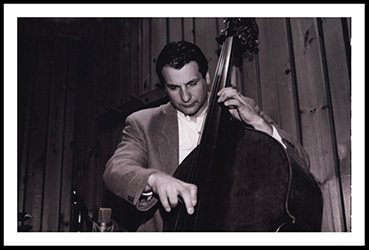 I simply allowed my live accompaniment to fundamentally stand on its own, staying away from adding my Strat Orchestral colors. For what it's worth now, John Patitucci always plays so great and musically like this. Always! I simply allowed my live accompaniment to fundamentally stand on its own, staying away from adding my Strat Orchestral colors. For what it's worth now, John Patitucci always plays so great and musically like this. Always!
With the guitar solo now entering at Letter [B], there is obviously a change in the mood and color of this section. As I reflect back on what I played late that night, I am going to go through the entire solo and present some of the possible Improvising Strategies that I was probably putting to use. As "Dreamsville" is a 4/4 ballad with the tempo roughly being [Q=68-70], when you look at the transcription, the first 8 bars can appear as if I had played a LOT of notes. But this is really only because the tempo is so slow and, if only because of that, there are going to be a goodly amount of 16th-notes. In general, the harmonic movement during [B] is two chords per bar. As the first chord of this Bridge section is F#m7b5, over such chords, in my early years in New York, while trying to simplify and understand lines and harmony better, I began to "think of" (the cerebral part of learning to play, to hear) everything, pretty much, as Dorian minor. So for F#m7b5, the mode becomes A Dorian [A, B, C, D, E, F#, G] and if you look at what I played, you see that all the notes are from this one mode and they extend through beats 3-4 where John's bass note has changed to B-natural for the B7(alt.) where normally one might employ the B altered dominant scale [B, Cb(b9), D(#9), D#, F(b5), G(#5), A] - so without changing modes/scales, A Dorian offers me Cb/B(b9), D(#9) and G(#5). It becomes a nice way to "hear through" the changes without actually changing anything. With the arrival of Em9(maj7) which should indicate E melodic minor [E, F#, G, A, B, C#, D#], you hear me descending through the chord tones that include a B major triad [F#-D#-B] which lands me on G-natural a nice chord tone over A7(13). In bar 3, the lush sonority of A/B or B7(9sus) arrives and that to me would indicate F# Dorian [F#, G#, A, B, C#, D#, E] and here I again use another triad, an A major triad to outline the sense of the harmony. Bar 4 presents Cm7-F7(13), 2 beats each, where I tend to view the whole thing as C Dorian [C, D, EB, F, G, A, Bb] and using no chromaticism at all, this is exactly what you hear and see.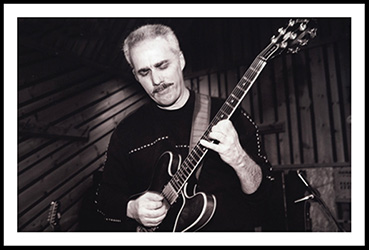 One of the beauties or luxuries of playing in a trio w/ percussion format like this is that I can be free to adjust the harmonies as I see fit in any given moment. So the written chord change might say one thing but I can employ something else - always trusting that John Patitucci is going to hear what I'm doing. So in bar 5, the indicated chords are Abm7b5/Db to Db7(alt.), I simply heard through the bar as Db7(altered) which usually indicates to me b>Db altered dominant scale [Db, Ebb(b9), Fb(#9), Gbb, Abb(b5), Bbb(#5), Cb]. To many sophisticated players, they would simply call this D melodic minor [D, E, F, G, A, B, C#] - with enharmonic spellings, you see they have the exact same notes. Here you now hear some chromaticism and on beat 4, a characteristic Jazz phrasing mannerism is put use with a nice downward chromatic gliss from Fb to Db. In bar 6, the changes might say: F#m7b5-B7(alt.), but here I have altered the first chord with my line to indicate F#7(alt.) - changing a m7b5 to an altered dominant sound. Where pentatonic improvising is concerned, I like the two dominant 7th pentatonic options here of: D dominant 7th pentatonic b> [D(#5), E(7th), F#(R), A(#9), C(b5)] and C dominant 7th pentatonic [C(b5), D(#5), E(7th), G(b9), Bb(3rd)]. As you can see, each one offers you 3 of the 4 altered tones. I chose to use the D dominant 7th pentatonic with chromaticism. Over the B7 chord, I played notes from B7(13) but landing on the D-natural(#9). In bar 7, we are looking at Em7b5-A7b5, both chord changes based upon Mancini's melodic contours, but within the openness of this texture, I treated the Em7b5 chord as if it was simply Em7 and you can hear that in the Jazz-oriented phrasing gliss from D down to B-natural. But over the A7(alt.), I moved into a chromatic stretching of applying C minor pentatonic [C(#9, Eb(b5), F(#5), G(7th), Bb(b9)] which gives you all of the altered tones. The thrust of the descending line is going to place me chromatically on A-natural. Lastly, in bar 8, over Dm7(9)-G7(b5), you see that I am ascending through D Dorian [D, E, F, G, A, B, C] closing out the section. One of the beauties or luxuries of playing in a trio w/ percussion format like this is that I can be free to adjust the harmonies as I see fit in any given moment. So the written chord change might say one thing but I can employ something else - always trusting that John Patitucci is going to hear what I'm doing. So in bar 5, the indicated chords are Abm7b5/Db to Db7(alt.), I simply heard through the bar as Db7(altered) which usually indicates to me b>Db altered dominant scale [Db, Ebb(b9), Fb(#9), Gbb, Abb(b5), Bbb(#5), Cb]. To many sophisticated players, they would simply call this D melodic minor [D, E, F, G, A, B, C#] - with enharmonic spellings, you see they have the exact same notes. Here you now hear some chromaticism and on beat 4, a characteristic Jazz phrasing mannerism is put use with a nice downward chromatic gliss from Fb to Db. In bar 6, the changes might say: F#m7b5-B7(alt.), but here I have altered the first chord with my line to indicate F#7(alt.) - changing a m7b5 to an altered dominant sound. Where pentatonic improvising is concerned, I like the two dominant 7th pentatonic options here of: D dominant 7th pentatonic b> [D(#5), E(7th), F#(R), A(#9), C(b5)] and C dominant 7th pentatonic [C(b5), D(#5), E(7th), G(b9), Bb(3rd)]. As you can see, each one offers you 3 of the 4 altered tones. I chose to use the D dominant 7th pentatonic with chromaticism. Over the B7 chord, I played notes from B7(13) but landing on the D-natural(#9). In bar 7, we are looking at Em7b5-A7b5, both chord changes based upon Mancini's melodic contours, but within the openness of this texture, I treated the Em7b5 chord as if it was simply Em7 and you can hear that in the Jazz-oriented phrasing gliss from D down to B-natural. But over the A7(alt.), I moved into a chromatic stretching of applying C minor pentatonic [C(#9, Eb(b5), F(#5), G(7th), Bb(b9)] which gives you all of the altered tones. The thrust of the descending line is going to place me chromatically on A-natural. Lastly, in bar 8, over Dm7(9)-G7(b5), you see that I am ascending through D Dorian [D, E, F, G, A, B, C] closing out the section.
John signals the cadence to Cmaj7(9) and the arrival of [A3] by offering a beautiful G-pedal, the 5th of the chord, and somehow, his superb rhythmic placement of those G-naturals, signaled to me, without a word or a look, that we were about to begin to feel double-time. This is why, from this point forward, I chose to write out the transcription in cut-time. So, to accommodate the 8th-notes, what was once one bar now becomes two bars. You can hear that Jack DeJohnette 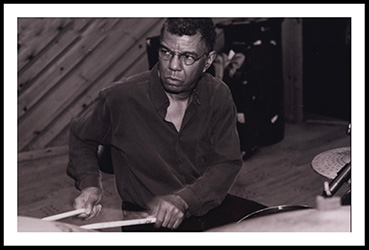 just heard this/felt this, and with a motion as smooth as it can be, he moved right into it with John and me. There is something so magical about the unspoken. Over the Cmaj7(9) in bars 1-2 and 5-6, I am putting to use one of my favorite melodic devices over any major 7 chord and that it is to use the minor pentatonic based upon the 3rd of the chord, in this case that becomes E minor pentatonic [E, G, A(6th), B(maj7), D(9th)] which gives you 3 of the beautiful color tones. In bars 3-4 over the Gm7/C chord, I am using G minor pentatonic [G, Bb, C, D, F]. Doing this gives one an immediate continuity of intervallic spacing and phrasing. It becomes something that you just "do" and do not have to "think" about it because you have become used to "hearing" things/music this way. In bars 7-8, over the Gm7/C-Dbm7/Gb, over the Gm7 chord, I'm actually using D minor pentatonic [D, F, G, A, C] which includes a nice color tone (9th) and then over the b5 substitute of Gb7, I am using the ii-V of the b5 sub which is Db Dorian [Db, Eb, Fb, Gb, Ab, Bb, Cb]. Yikes! So many flats! Notice how as bar 7 glides into bar 8, the G-natural slides right into Ab and the changing of modes. At the end of the bar, I use another Jazz phrasing mannerism on beat 4 with the little 16th-note triplet grouping. This is all part of the feeling of the idiom and speaking the language of the idiom. These little details should not have to be thought about and they should become as natural for you as speaking or walking. In bars 9-10 over Cm7-F7(13), I am simply using C Dorian again without any chromaticism. In bar 11, in triplets, I am using D minor pentatonic over Dm7. And in bar 12, over the Eb7(9) chord, I am playing more from Bb Dorian [Bb, C, Db, Eb, F, G, Ab]. Bars 13-14, over Dm7-G7(alt.), the phrase begins with yet another Jazz phrasing mannerism, a grouping of an 8th-2 16th notes. Pay attention to the usage of ghosted-notesfor feel and phrasing which I have tried to indicate with x'ed notes. A lot of players would say that I am using an E triad (E-B-G#) over G7 to produce some tensions for resolution, but I chose to spell in the transcription with Ab(b9) instead of G# as that feels theoretically more correct. This section concludes in bar 15-16 with lyrical phrasing and the slightest touch of chromaticism with all diatonic notes from C major or C Ionian [C, D, E, F, G, A, B]. I really like how the ascending line flows right into bar 1 of the next section. just heard this/felt this, and with a motion as smooth as it can be, he moved right into it with John and me. There is something so magical about the unspoken. Over the Cmaj7(9) in bars 1-2 and 5-6, I am putting to use one of my favorite melodic devices over any major 7 chord and that it is to use the minor pentatonic based upon the 3rd of the chord, in this case that becomes E minor pentatonic [E, G, A(6th), B(maj7), D(9th)] which gives you 3 of the beautiful color tones. In bars 3-4 over the Gm7/C chord, I am using G minor pentatonic [G, Bb, C, D, F]. Doing this gives one an immediate continuity of intervallic spacing and phrasing. It becomes something that you just "do" and do not have to "think" about it because you have become used to "hearing" things/music this way. In bars 7-8, over the Gm7/C-Dbm7/Gb, over the Gm7 chord, I'm actually using D minor pentatonic [D, F, G, A, C] which includes a nice color tone (9th) and then over the b5 substitute of Gb7, I am using the ii-V of the b5 sub which is Db Dorian [Db, Eb, Fb, Gb, Ab, Bb, Cb]. Yikes! So many flats! Notice how as bar 7 glides into bar 8, the G-natural slides right into Ab and the changing of modes. At the end of the bar, I use another Jazz phrasing mannerism on beat 4 with the little 16th-note triplet grouping. This is all part of the feeling of the idiom and speaking the language of the idiom. These little details should not have to be thought about and they should become as natural for you as speaking or walking. In bars 9-10 over Cm7-F7(13), I am simply using C Dorian again without any chromaticism. In bar 11, in triplets, I am using D minor pentatonic over Dm7. And in bar 12, over the Eb7(9) chord, I am playing more from Bb Dorian [Bb, C, Db, Eb, F, G, Ab]. Bars 13-14, over Dm7-G7(alt.), the phrase begins with yet another Jazz phrasing mannerism, a grouping of an 8th-2 16th notes. Pay attention to the usage of ghosted-notesfor feel and phrasing which I have tried to indicate with x'ed notes. A lot of players would say that I am using an E triad (E-B-G#) over G7 to produce some tensions for resolution, but I chose to spell in the transcription with Ab(b9) instead of G# as that feels theoretically more correct. This section concludes in bar 15-16 with lyrical phrasing and the slightest touch of chromaticism with all diatonic notes from C major or C Ionian [C, D, E, F, G, A, B]. I really like how the ascending line flows right into bar 1 of the next section.
As we have now arrived at the 'top' of the song and Letter [A], again my phrasing becomes sparse and the sense of conversation between John and Jack and me is so nice to listen to 20 years later. To do this, from my perspective, I am again using the same pentatonic strategies that I used during these 6 bars in [A3]. One little touch that I like hearing is on beats 3-4 of bar 4 where I put to use a linear piece of Bmaj9/6 (G#-C#-D#) to slide into E-natural and beat 1 of bar 5. In bar 6, notice that I use a G-triad (B-D-G-B) which, over Cmaj, outlines and touches upon the color tones of the maj7th and 9th. This leads up to bars 7-8 where a similar usage of triads, this time in triplets comes into play over Gm7/C, where I use both a C-triad and a Bb-triad to eventually vault up to A-natural. Passing through the b5 sub again, using notes from Db Dorian, I land on Bb, the 7th of C Dorian over the Cm7-F7(13). On beat 1 of bar 10, the Jazz phrasing mannerism with the 16th-note triplet grouping reappears as I descend through C Dorian and/or C minor pentatonic. In bar 11, over the Dm7 chord, I ascend using notes from a simple F triad, only to descend in bar 12, over the Eb7(9) chord using notes from Bb Dorian. But here, it is the inclusion at the end of a Gb that allows me to slide into a G-natural in bar 13 over Em7. In bar 14th, over A7(alt.), 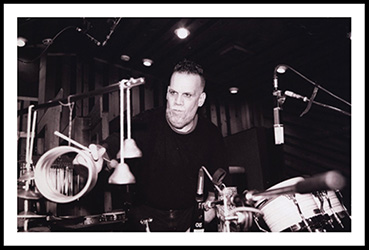 triads reappear as I use an F# triad (F#-C#-A#) first to outline A7(13b9) and then an Eb triad (Eb-Bb-G) to outline A7(b5-b9) - with a breath in between them. During the final 2 bars of this section, the bar line becomes blurred and the line alludes to G7(alt.) before the chord actually arrives in bar 16. Notice the E-triad again on the last 3 8th notes of bar 15. In bar 16, I play a most traditional vault up from the 3rd (B-natural) to Bb(#9) and descending back down via a sweep through an Ab minor triad (Ab-Eb-Cb). I love how this line flows right into an E-natural on beat 1 of the next section - sliding into it from F-natural. triads reappear as I use an F# triad (F#-C#-A#) first to outline A7(13b9) and then an Eb triad (Eb-Bb-G) to outline A7(b5-b9) - with a breath in between them. During the final 2 bars of this section, the bar line becomes blurred and the line alludes to G7(alt.) before the chord actually arrives in bar 16. Notice the E-triad again on the last 3 8th notes of bar 15. In bar 16, I play a most traditional vault up from the 3rd (B-natural) to Bb(#9) and descending back down via a sweep through an Ab minor triad (Ab-Eb-Cb). I love how this line flows right into an E-natural on beat 1 of the next section - sliding into it from F-natural.
Suddenly, we have arrived at Letter [A2], the last section of the solo. In bars, 1-6 the use of space is again paramount allowing John, Jack and Manolo to comment if they choose to do so. Leading into bar 7, you see/hear a Bb triad (Bb-D-F) which I sweep downward through in order to land on E-natural over the Gm7/C. For me, I always associate this device with the great Wes Montgomery. Once again, the bar line is blurred, and I am approaching the Dbm7/Gb before its arrival in the next bar. Notice how on beat 4 of bar 7, using the same Jazz phrasing mannerism, this time with a small piece of Db Dorian. During the last 8-bars of the solo, the trio is in full bounce mode with the swing underneath from John's feeling and ghosted-notes, all within Jack's subtle brilliance. In bars 9-10, where Cm7-F7(13) reappears, you could say that I am simply putting to use C Dorian through both chords in a melodic way. Using a B-natural as chromatic passing tone to get me to Bb on beat 1 of bar 11 over the Dm7 chord. That note, though not a strict modal tone, is really viewed as a chromatic upper neighbor to A-natural. In bar 12, I outlined the sounds of Eb7(9b5) by playing F-A-C down to Db and back up to F-natural. As the solo draws to a close, the phrasing is again sparse, passing through that E-triad again over the G7(alt.) chord down to a resolution on E-natural over the last Cmaj7(9) chord. In bars 15-16, I try to gracefully lead us back into the return of the melody at Letter [B] along with the band's return to 4/4 ballad time feel which Jack negotiates with supreme ease - master that he is.
I have to mention my old friend and longtime bandmate Manolo Badrena who played so sensitively here that, at times, you wonder if he's even there - but he is. Some people think that Manolo is some kind of a musical wild man but not always the case, not at all. He is very, very much aware of everything - and, in the end, while always playing what he feels - having the freedom to do that, he senses where the spaces are and sometimes he fills them, sometimes not. On "Dreamsville" he was exceptionally minimalist.
With the return of the melody at [B], the chordal harmonies interspersed with the lines offer the dreamy in "Dreamsville" - the sparsely utilized Strat Orchestrations sound so very ghostlike here - which is really the precise intended effect. Needless to say, with [A3], we are nearing the end of the piece, but tempo continues right through to the Coda, where the first fermata appears over the 2nd chord in the bar on beat 3, Bb7(13b9). From there we are in tempo Rubato and I am guiding the band through it all. The next four sonorities which I have labeled in the simplest possible way those they are all parallel voicings with a triad on top and 4th below. Over the Bb pedal-point, those voicings harmonize a final paraphrase of the opening lyric "I'm in dreamsville....." This is the kind of small touch that I really love - thinking as an arranger. While this is going on Jack is switching to his light mallets and offers very sensitive cymbal rolls right to the end.
In preparation for all possibilities, I began to prepare video frames of images and text for a video presentation that would work nicely with YouTube and would give a listener a little more to look at rather than one static image - usually of a CD cover. In the end, I was so very fortunate that Laura Stincer was kind enough to accept editing the video presentation together and as you will see, she did an absolutely fantastic job. No matter what, the offering of "Dreamsville" would now serve as a dedication to the artistry of Jack DeJohnette, and hopefully friends and fans alike would receive it that way.
Another great gift in 2005 was that my search for a graphic designer for CD cover artwork, by some miracle, I was able to reconnect with the superlative Janet Perr. Not only did we work together during my years at Columbia Records, when Janet was just a youngster, but we spent a number years living in the same building in the Chelsea area of Manhattan. I was so happy that we would be working together again and our collaboration on "THE GREEN FIELD" led to working together on, in total, 11 CD projects. Some of them involved different covers for different territories. That was probably more fun for me than it was for Janet but the end results were beautiful to look at.
It becomes a rare opportunity for music fans to actually get to see all of the various designs that Janet submitted to me for "THE GREEN FIELD" album. In truth, I love them all and it was almost impossible to choose just ONE of them for the cover. In the end, Janet and I both loved, what we came to refer to as, the "lavender" cover. It is this cover that I chose to represent "Dreamsville" in the video presentation. The only cover not presented is the "chocolate" version which became the cover for the Tone Center Records release in the USA. President Mike Varney, who has become a close friend, felt that "lavender" was not rough & tough enough for the persona of his label - mainly known for furious shredders of the highest technical abilities. This becomes an amusing side note at best. Just enjoy seeing them all and I hope that you will come to have your own favorite - the one, the color, that you would have chosen. You can view the COVERS at this special page that I created.
Again, as I sit here today, what I wrote just below was written 20 years ago when I was 58 yrs. old, so if anyone is reading this, imagine how I feel right now at 78 yrs. of age. Back then, I was writing about just how much shorter my green field was. As I mused about it then, I really could not have known that I would even be around to experience just how much shorter it actually looks to me now. With the passing of so many dear friends, family members, musical compatriots, it becomes remarkable that I can sit here and even think about such philosophical things. More to the point, with the recent losses of both Jack DeJohnette and Anthony Jackson all such things are felt more deeply.
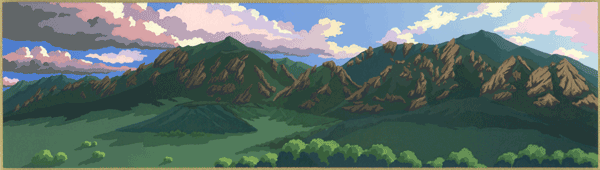
The notion of a "green field" was born during a discussion with an old and dear friend about "death" or, perhaps better said, about the sense of "loss." I have never viewed myself as a particularly profound person, especially when speaking extemporaneously, but, in that moment I guess I just got lucky when I stated something resembling the following:
"....When one is in their 20s, as we look ahead, far into life and the future, as we can see it from that perspective, the green field which lies ahead of us seems endless, and so full of possibilities and dreams. But, as one grows older, one experiences loss in all its varied forms, divorces and separations, sadly seeing your parents pass away, seeing one's friends and contemporaries die around us(sometimes even those considerably younger), the view of the green field changes. Suddenly, it is a much shorter green field, and the opportunities that remain must be guarded and treasured in a far different manner, and, from a perspective of greater maturity and wisdom. At least we can hope for that.
Like anyone else, perhaps, I fear a prolonged and/or painful death, but, death in and of itself, I do not fear. I don't know that one ever gets to do, or accomplish all that they would like, but, for my part, I have led a rich life, often times filled with beautiful and wonderful people. If it were all to end tomorrow, I could never feel cheated by anything, nor anyone, for I know that I have been a lucky man, and will leave behind my good work, and even some good deeds."
And so, in that spirit, I would say to all of you, take advantage of what is in the now, don't belabor the past, and don't spend unnecessary energy worrying about the future. But, do plan for it, in order to make use of it. For all that John Patitucci, Jack DeJohnette, and Manolo Badrena gave to this performance of "The Green Field", I can only hope that, at least once, you will choose take 18:05 of your life, and devote it to listening to this performance. It was a highly significant moment in my musical life, in my life. I hope that it can contribute something intangible to yours. Thank you so much for listening!!!
As always, my most sincere "Thank you!" to everyone who visits these pages with regularity. PEACE, LOVE and ETERNAL FLOWER POWER!!! All so very much needed in these dark times - Steve
[Photos: Jack DeJohnette, Manolo Badrena, John Patitucci and Steve
@ Avatar Studio 'A', May 23rd, 2005
Photos by: Richard Laird]
|